Cheddar - caveclimb May 2017
Main menu:
Cheddar – Proposals for Regeneration
(Cycling section updated 07/02/21)
Who?
I'm Andy Sparrow and together with my wife, Rachel, we run an award winning Cheddar business called caveclimb.com (if you want to find out more click the menu button above). We organise and instruct caving, climbing and abseiling in the local area. You can find us listed on Trip Advisor as the number one outdoor activity provider for Cheddar. When I came to Cheddar as a child the Gorge and the caves made a huge impression on me, so much so that in my mid teens I joined one of the Priddy based caving clubs and made the Mendip Hills my second home. My passion for caving became a job when I started work leading Adventure Caving trips at Gough's Cave in 1984. By 1990 I was self employed as an outdoor pursuits instructor and in 2000 I moved to Cheddar where I still happily reside.
Why?
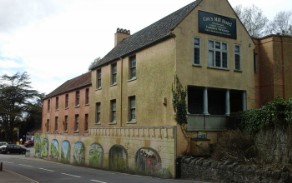
I was 9 years old in 1963 when my parents bought their first car and our immediate destination for a family day out was Cheddar Gorge. I think it speaks volumes that Cheddar was top of the list as a tourist destination at that time. It was about then that Cheddar Caves recorded their busiest ever day with just shy of 8000 customers. I was told this by an old cashier at the caves when I started work there in 1984, by which time numbers peaking at bank holidays were reaching only half that total. Nevertheless Cheddar was still thriving; coaches were arriving in droves and in busy periods every car parking space seemed to be full by midday. But nothing stays the same, and by the millennium the number of coaches were diminishing and many other tourist venues were competing for Cheddar's customers. Businesses began to struggle and some closed; empty shops and properties testified to Cheddar's decline. Now in the time of covid things look bleak indeed with Cheddar Caves closed for the foreseeable future and the village dominated by the symbolically rotting edifice of the once grand Cox's Mill.
So what can be done to regenerate Cheddar? The original attraction of Cheddar, the landscape, remains the same. What has changed is how people want to interact with that landscape. I'm talking about adventure tourism and physical activity in the countryside, about walking, cycling, caving, climbing and canoeing. If you journey from the east coast 100 miles will pass by before you see a steep rocky hillside. Not until you reach the Mendip Hills will you find a landscape that offers the adventure that many, desk-
Having said that, we can do better and there is much more that we can offer. Here are my suggestions for action and improvement. Some of these are easily applied, some are very ambitious, but let's not be afraid to think big....
Walking
Many visitors to Cheddar come specifically to walk. It's probably fair to say that there are two types of walkers; those who pre-
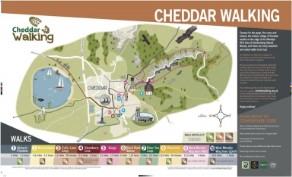
Walking maps are on display at the bottom of the Gorge and offer the visitor ten different options (https://cheddarwalking.org.uk/) . Two of these routes are short and contained within the village; neither has any signs to aid in navigation. The West Mendip Way accounts for two more options but these are 'out and back' options rather than the more satisfying circles that most walkers prefer. Two more options are flat walks by the river and reservoir; they are pleasant enough in their way, but again neither is signed.
The three remaining walks on the map, the circular Gorge walk, Black Rock and Middledown Reserve are the by far the most rewarding walks. They do have some direction signs but not nearly enough (based upon the frequency that we are asked for directions). The path on the northern National Trust side of the Gorge is quite well maintained but on the Southern side it's a very different story and the route can get very muddy.
One walk conspicuous by its absence is the Gorge itself, which seems strange since it is the feature that attracts most visitors to Cheddar. It is undeniably far the best place from which to appreciate the dramatic cliffs so why is it not recommended as a walking route? The answer is simple – it has no safe pedestrian pathway. Verges can be used as far as Blackrock Gate but it's very unpleasant experience walking close to often fast moving traffic. Above Blackrock gate the gorge is really a no-
Returning to the current walkers map... I don't want to be critical of whoever conceived and created this but the suggested routes are not exactly what I would have chosen. There's a good footpath network on the southern side of the Gorge with routes extending from Bradley Cross that pass through or close to three nature reserves. There are certainly several circular routes here that qualify to be included in a top ten of Cheddar based walks. The options improve considerably when the access land is taken into account. You can see below a map of the area onto which I have added a linking route across the access land which connects this southern area with the upper Gorge and the Blackrock Gate reserve. If two stiles could be constructed it would join up the paths that intersect the Gorge and create a new circular link.
To summarise:
There is a complete lack of pedestrian provision in the gorge itself. A pedestrian footpath running beside or parallel to the road is urgently required.
The quality of suggested local walks would be greatly improved by including access land and nature reserves.
The popularity of a local footpath network depends upon signage and maintenance.

Road Cycling
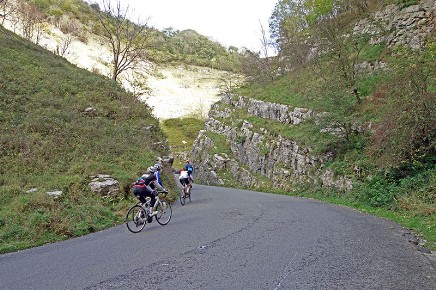
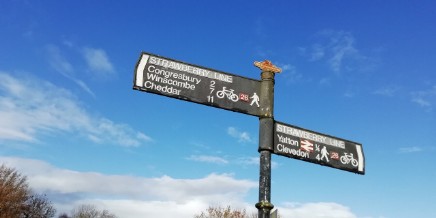
heddar is incredibly well placed for road cycling being at the heart of a network of hundreds of miles of quiet lanes. To the south are the Somerset levels providing extensive flat routes. To the north is Cheddar Gorge, a classic UK climb leading up to the Mendip plateau. To the East is a complex maze of lanes extending to Frome, and going west provides a link to the coast where national cycling routes lead north and south. The is also the Strawberry Line which provides a family friendly link from Cheddar to Yatton station enabling a care-
There are other ways to attract cyclists to Cheddar:
As a starting/finishing point for sportives. Sportives are organised rides around set routes which are usually organised and advertised by private companies who charge each rider a fee. It might be possible to liase with these companies and facilitate their choice of Cheddar as a venue.
A weekend cycling festival, similar to a sportive but organised locally to encourage the use of our hosptitality facilities.
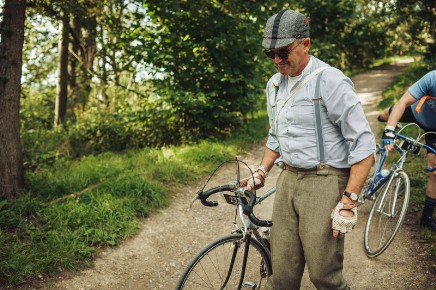
A retro or classic bike themed festival similar to the one held in Anjou, France or the Eroica series of events.
Update 7/2/21 We have a new bike shop and hire centre in Cheddar, which is excellent news. Also very pleased to hear that a Cheddar Cycling website is under construction.
Mountain Biking
The immediate area around Cheddar is not blessed with many options for the mountain biker but the wider Mendip area certainly is. There's a lot of information already available at https://www.ridemendips.org/ Cheddar still has its part to play as a base – we have the accommodation, we have the restaurants, shops and takeaways. It should certainly be prominent in our 'brand'.
Climbing
The Cheddar cliffs attract hundreds of climbers every year. The numbers have grown in proportion to the provision of sport climbs (those that are pre-
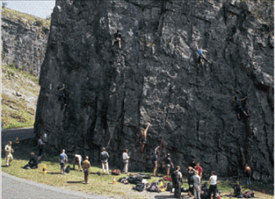
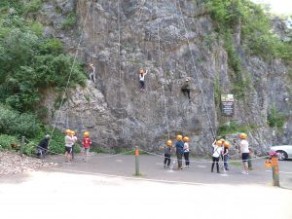
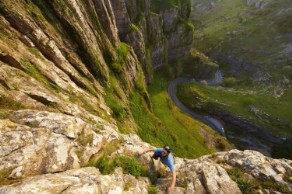
Many visitors to Cheddar who see the climbers in action want to have a go themselves and one might expect this to be a readily available commercial option but it's actually specifically excluded in the access agreement. The agreement states that Cheddar Caves & Gorge do not allow commercial activity (i.e paid for instruction) on their land in the Gorge. The agreement also states that the National Trust does not, as a rule allow commercial activity (i.e those paying for instruction) on their land in the Gorge. However providers can ask permission by calling the ranger team on 01452 814213 and in certain circumstances this may be given. I could at this point include my own email thread with the National Trust in relation to this. Suffice it to say that my application for permission to instruct climbing in the Gorge was not successful, and this despite a national policy from NT that states: We want to welcome and encourage providers – from independent instructors to large-
The only currently available commercial option in the Gorge for is that offered by Cheddar Caves who run short introductory sessions on one cliff with a mixture of natural and artificial holds. I think it's reasonable to assume that their ban on any other businesses providing climbing is (at least in part) intended to protect their own commercial interests, but we should bear in mind that not all outdoor instruction is about beginners. Consider the mountain guiding culture in Europe where individuals hire the services of a professional instructor to undertake specific objectives. A market for these professional services definitely exists in the UK.
Imagine a couple based in London who attend an indoor climbing wall and climb to a reasonably high standard who then come to Cheddar for a weekend of guided instruction on real rock. They might, having demonstrated a satisfactory standard on the first day, then progress to a guided ascent of 'Castles in the Sand' a sensational climbing route from road level to the top of The Pinnacles. These visitors might stay in a Cheddar hotel, eat in Cheddar restaurants and spend in Cheddar shops. They might also post stunning images of their adventure on social media. Two visitors like this spending a weekend in Cheddar can generate as much income (I estimate about £800) as a coach full of tourists on a brief stopover. Not only this but they can post much more potent images that out-
Another observation I would make is that many of the original 'trad' (unbolted) climbs have fallen into disuse. The current sport climbing options tend to be quite hard and there's not much on offer for the beginner (or, in my case, the veteran). There are many excellent lower grade 'trad' climbs like 'Morning Glory' (which provides an entire multi-
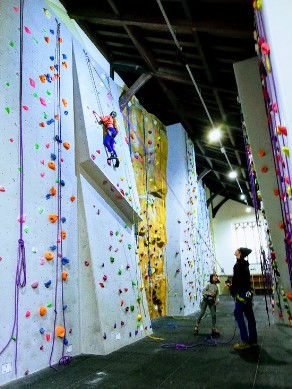
Climbing is a dry day time and dry weather activity. An indoor climbing wall would provide a venue suitable for all weathers and times of the day. Indoor climbing has boomed over recent years and even walls located in rural situations have proved viable business models. The ideal premises is a 2 or 3 storey building such as an old warehouse or factory. If there existed in the centre of Cheddar a disused building of 3 storeys that could be gutted out to provide an historic shell for such a venture it could prove to be a commercial success. Such a building, of course, does exist in the form of Cox's Mill, which is currently rotting away and awaiting demolition.
Sadly, it's probably too late to save historic Cox's Mill, but the concept of an all weather climbing wall should be considered favourably. It's not just about individual climbers; Cheddar could be a hugely successful venue for group activities, and having the capacity to offer all-
Caving
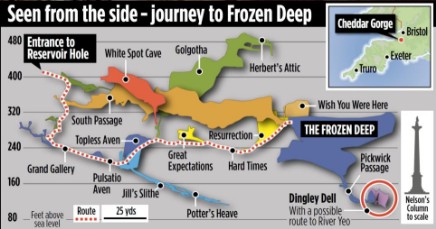
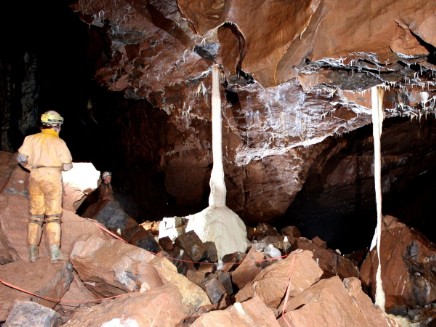
Cheddar Caves has run a successful commercial Adventure Caving experience for nearly 40 years and Wookey Hole have recently introduced their own equivalent called 'Wild Wookey'. My own career in outdoor instruction began as a caving leader in Cheddar caves. It soon became apparent to me that our customers were so thrilled with their caving experience that they wanted more. It was this realisation that led me start my own business leading groups into the caves of Burrington Combe and Swildon's Hole at Priddy. The Adventure caving experience in Cheddar is excellent but there is so much more to be seen beneath the Gorge. In 2011 cavers exploring in Reservoir Hole (an extensive cave system below the covered reservoir) made an incredible discovery. After enlarging a narrow passage they emerged into a huge chamber filled with fantastic formations which they named The Frozen Deep. This chamber, one of the biggest in the UK, attracted a good deal of media attention at the time. Subsequently a passage was discovered that led very close to surface which could provide a much easier access to the chamber.
Such a cave could of course be turned into a traditional show-
Via Ferrata
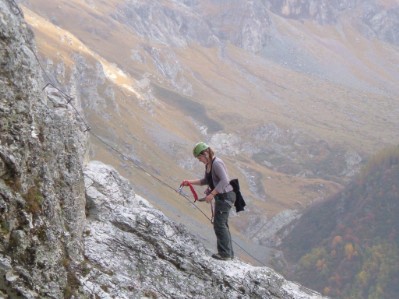
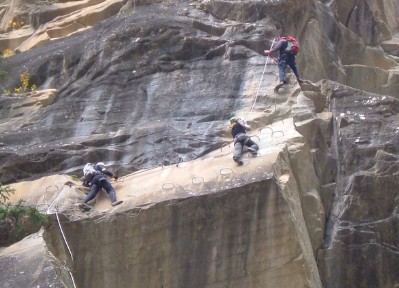
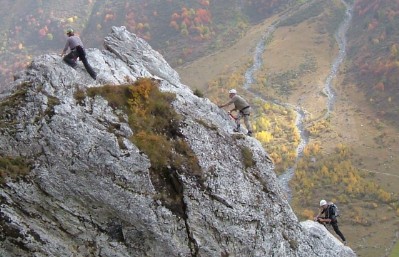
Via Ferrata is barely known in the UK but it's hugely popular across the alpine countries. It is climbing and mountaineering protected by steel cables, assisted by metal staples, and enhanced by wobbly wire or suspension bridges. It varies in difficulty from easy ledge paths protected by the cables to extreme traverses and overhangs above huge drops. It's a quite low impact installation which is attached to the rock by drilled holes and resin. Personally, I have done over 100 via ferratas and have spent much time studying the gorge for its suitability. I think that two routes are possible. One of these would be of the cabled pathway type and would allow visitors to safely follow ledges from High Rock Amphitheatre towards Sunset Buttress. This would be a physically easy route suitable for a wide range of ages and confidence. The other route would ascend the arete on the western side of Shoot Gulley and then follow narrow ledges towards the Pinnacles where the gullies could be crossed on wire bridges.
I firmly believe that these routes would be truly sensational and would attract huge public interest. Currently only one other via ferrata operates in the UK, this being in the Lake District. In France most via ferratas are free to use and local communities fund them in order to increase tourism. Such an arrangement is unlikely in the UK and access would probably be restricted to guided groups. The management of Cheddar Caves long imagined a new iconic image of a cable car rising above the lake. This development never happened for financial and environmental reasons. I propose an alternative image of a person crossing between the Pinnacles on a two wire bridge – something much cheaper and greener that would have a magnetic attraction for the adventure tourists that we hope will be the future of Cheddar.
Water Sports
Cheddar reservoir has eased its access restrictions to allow commercial instruction in kayaking, wind surfing and paddle boarding. These activities need to be promoted as part of the Cheddar experience.
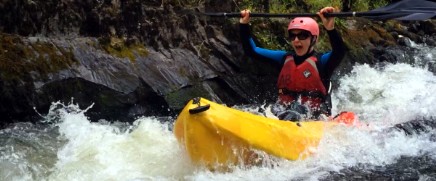
Now let us think big – really big. Imagine Cheddar as a white water kayak and canoe centre – it's not impossible. Everyday 80 million litres of water resurges by Gough's Cave and descends 20 metres over a distance of 1500 metres. This is the river Yeo. Imagine that the course of the Yeo through Cheddar was made navigable by canoes and kayaks, that the river bed was landscaped and the bridges modified.
Then imagine a sluice at the lake that allows controlled pulses of water to be released... What a huge draw to Cheddar this could be. The white water centre in Cardiff and the Wave surfing centre are highly successful examples of what can be accomplished with sufficient vision and investment. The scheme I have envisaged for Cheddar is on a more modest scale than these ambitious ventures buts its potential impact on the public imagination is equally dramatic.

Working together
It won't escape anybody's notice that some of my proposals require other people to spend a considerable amount of their money! However the cost of installing a via ferrata is several orders of magnitude less than the controversial plans for the Cheddar cable-
One thing the cable-
About 5 years ago my wife and I applied to Longleat to lease one of the small shops opposite Cox's Cave. We had an idea we wanted to try out – to open a booking office for local activities, our own equivalent of the Maison des Guides which can be found in many Alpine towns. Our main sell would be our own caving, climbing and abseiling sessions but we also hoped to work as agents on commission for activities offered by other providers. Our plan was not to be; Longleat refused us a lease because they saw us as competitors for their own climbing and adventure caving. I see things rather differently. The future of Cheddar depends more than anything else on the interested parties working together. It's the importance of understanding that what's good for one of us is good for all of us.
The success of Cheddar throughout the last century was built on mass tourism. The visitors came in vast numbers, first on the weekend excursion trains, then in coaches, and finally in fleets of private cars. Their visit typically included a trip to the caves, a cream tea or a bag of chips and a souvenir to take home. They would come in the morning and leave in the afternoon. Their individual spend was not high but multiplied several thousand times it fuelled a vibrant local economy. The long proposed and long resisted cable-
Andy Sparrow
January 2021
andy@caveclimb.com
Your comments and opinions are valued!

A well written document/proposal, whilst I am not a resident of Cheddar I have visit many many times over the years and mainly attracted by the adventure of the area rather than general tourism and in the immediate vicinity. The general trend is that people want to have an experience rather than the usual mundane tourist trappings, whilst there is a mass market for the tourist trappings the experience option is mainly on the rise.
Even age plays a big part these days, the "older" generation also now wants adventure where in the past traditionally this was limited to the younger generation, good health, longevity, availability/accessibility to adventure and more cash in the pocket have helped to facilitated this change.
A key thing to try to get across to other businesses outside the adventure industry in Cheddar is the associated all year round business your proposals bring with them. Adventure experiences are not a summer time activity only (clearly there will be a spike in summer), creating Cheddar as a regional centre for excellence for adventure will bring people in all year round. The tourist traps will benefit as will the traditional shops, pubs, cafe's etc.
Obviously you have a vested interest in seeing these suggestions come off as a commercial provider, this will be seen by some as self serving, however, unfortunately you cant avoid this.
I wish you good fortune in your proposal and even if you manage to get a few of these id...


Also I am sure that you must be aware, but probably forgot, Cheddar was a huge draw for cycling clubs during its earlier tourism days.
Very best wishes to you both. Kay ☺😊😀

1. In your article you need a map to show the climbs and locations you list to make the descriptions more meaningful to non climbers.
2. Note a typing error in the last paragraph: "The economy of Cheddar cannot not "
3. I suggest Cheddar needs an information center as a focus point in a prominent position at the bottom of the gorge. This would make people aware of all the local facilities. It could have high quality external displays and be manned at busy times. It could have advertising for local businesses like yours?.
Aubrey

Another thing I would introduce to your document is traffic through the gorge itself, which can be very dangerous to all users, walkers, cyclists, motor vehicles. from those that want to admire the gorge to those who want to time trial up the gorge.
Not sure historically how longleat got involved with the gorge, but a question I would ask is their long term vision, from what I have seen all their involvement seems to be detrimental to the area, but not being a local, this idea could be only what I have seen in the media.
I hope this document will kick start a reaction from local people and business's. good luck Badger
